 Visit Istanbul Guide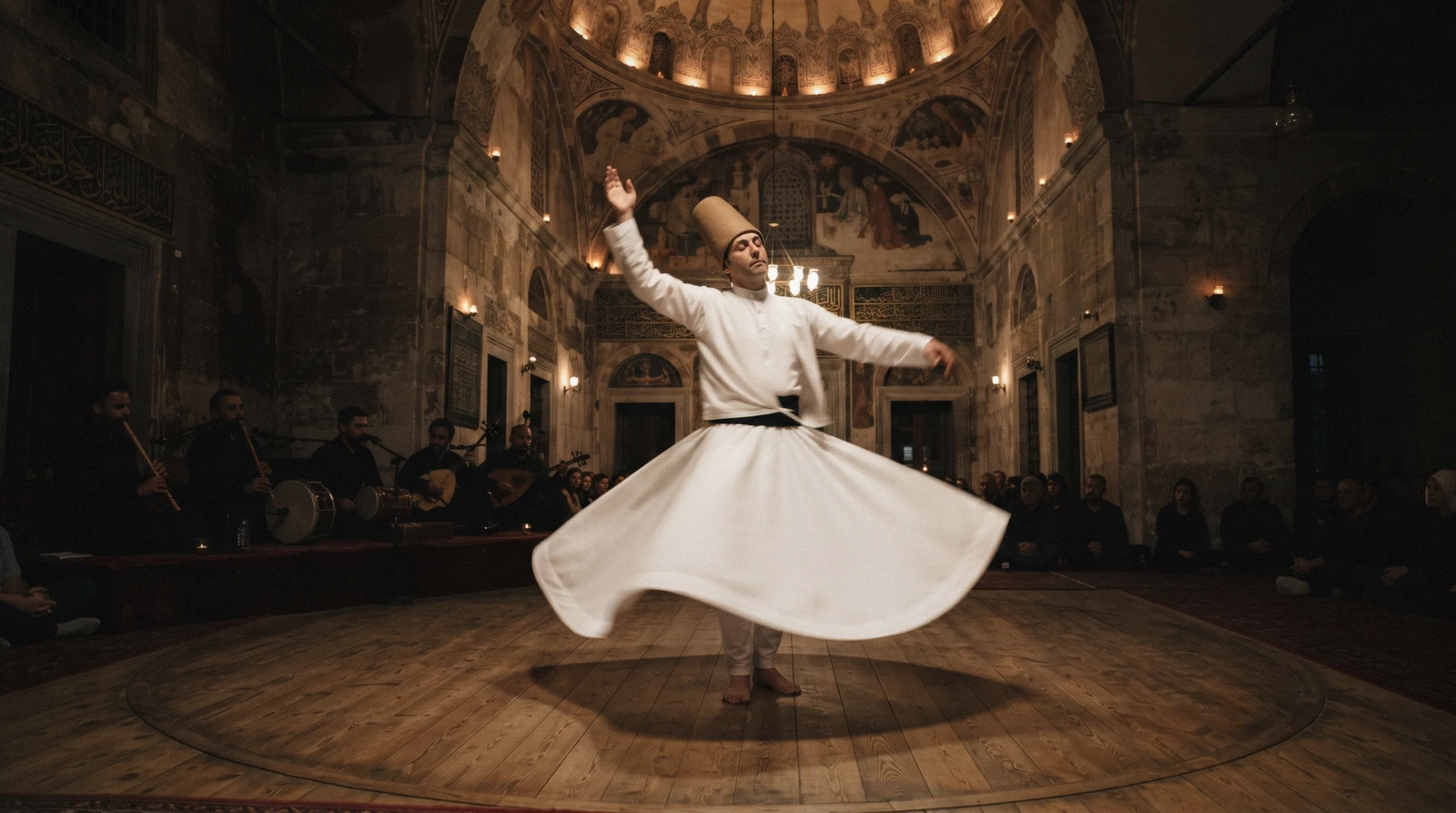
The Whirling Dervishes
Whirling dervishes Istanbul sells tickets to are performing the sema, the Mevlevi ritual in which turning is a form of prayer — and that is worth knowing before you arrive expecting a show. Venues range from a converted Ottoman bathhouse to a working lodge. The museum side of the story is at the Galata Mevlevi Lodge, on museums; the plan is on our what to see in Istanbul page.
Quick answer What it is, and how to watch it
The sema is a Mevlevi religious ceremony, roughly an hour long, in which dervishes turn with one palm up and one down. It is performed for audiences at several Istanbul venues; applause and flash photography are out of place, and most venues restrict photography during the turning itself.
Key takeaways
- The Hodjapasha ceremony is held in a converted fifteenth-century bathhouse and includes exhibition rooms
- The Galata Mevlevi Lodge museum, €7, tells the history and is on the Museum Pass
- Arrive on time — latecomers are generally not admitted once the ritual begins
- Dress as you would for a religious building; there is no formal code but the room is a ceremonial one
Key facts
Opening hours
| Evening ceremonies | Typically early evening–About an hour later |
|---|
Closed Varies by venue
Admission
- Adult
- Venue pricing — see the cards below
- Reduced
- Varies
- Free
- Not applicable
Planning it
- Time needed
- About one hour
- Book ahead
- Recommended — a few days
- Address
- Venues in Sirkeci, Sultanahmet and at the Galata Mevlevi Lodge
What the sema actually is
The Mevlevi order was founded on the teachings of the thirteenth-century poet Rumi, whose followers developed the turning ritual as a form of remembrance. The dervish turns anticlockwise with the right palm raised to receive and the left turned down to give, the tall felt hat standing for the tombstone of the ego and the white skirt for its shroud. The ceremony moves through set sections with reed flute and drum, and it ends without a bow.
The orders were closed by law in 1925, and the sema survives as cultural heritage — which is why it is performed publicly at all. UNESCO inscribed it on its intangible heritage list. That double status, ritual and heritage performance, is exactly why the venues feel different from one another.
How the venues differ
Hodjapasha, in a restored fifteenth-century hamam near Sirkeci, is the most theatre-like: fixed seating, a circular floor, and exhibition rooms included in the ticket. It is the version most first-timers see, and the building itself is worth the visit.
The Galata Mevlevi Lodge is the historical home of the order in Istanbul, now a Ministry museum at €7 with a wooden ceremonial hall; ceremonies there are held on a schedule the museum sets rather than nightly.
Sultanahmet venues run smaller ceremonies aimed squarely at visitors, often in hotel or cultural-centre halls. They are the most convenient and the least atmospheric.
Whichever you choose: no applause during the turning, no flash, and stay until the end rather than leaving as the music fades.
Ceremonies people book
Prices and ratings are the platform's own figures on 2 September 2026. Venues set their own prices; there is no official tariff to compare against.
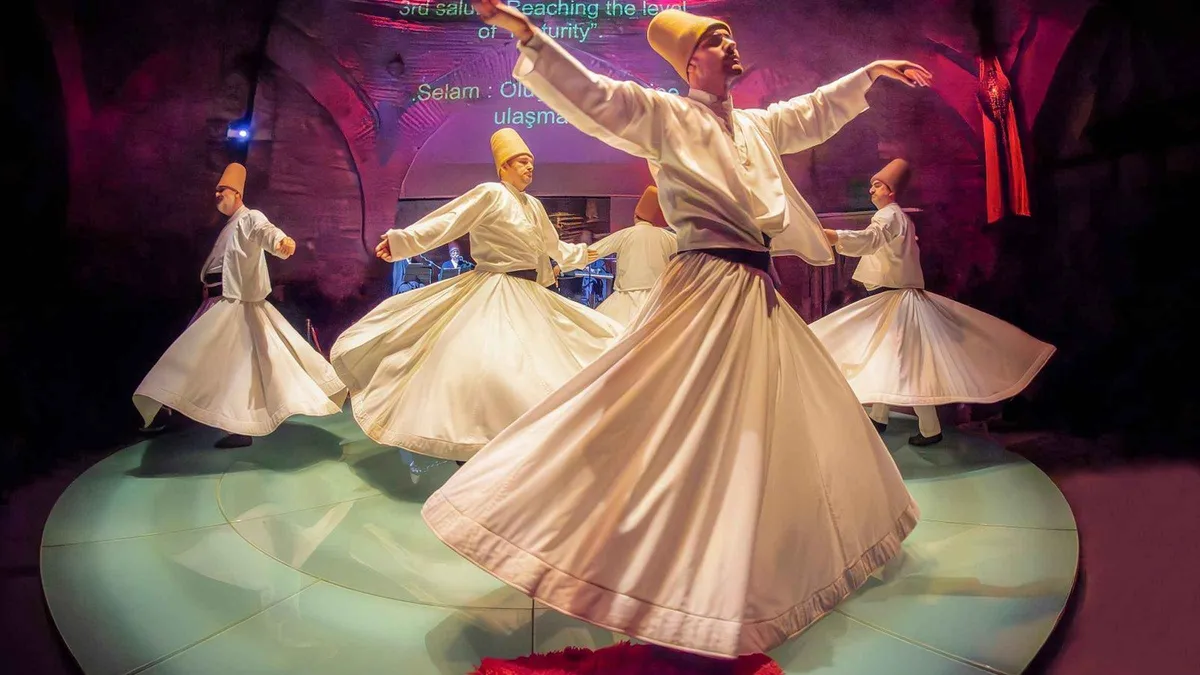 from $32
Istanbul: Hodjapasha Whirling Dervishes Show & Exhibition
The Hodjapasha sema in a converted 15th-century bathhouse, one hour, with the exhibition rooms included.
Check AvailabilityPrices, ratings and details are the platform's own. Dollar figures are the listed prices. The platform bills in your account's currency.
Sema questions
Is the whirling dervish ceremony a show?
It is a religious ritual performed for audiences. Treat it as you would a service: no applause during the turning, no flash photography, and stay to the end.
Where can you see whirling dervishes in Istanbul?
At the Hodjapasha centre in a converted fifteenth-century bathhouse near Sirkeci, at the Galata Mevlevi Lodge museum, and at several smaller Sultanahmet venues.
How long does the ceremony last?
About an hour, and it starts on time — most venues do not admit latecomers once the ritual has begun.
Can you take photographs?
Usually not during the turning, and never with flash. Venues state their own rule at the door.
What should I wear?
There is no formal dress code, but the room is a ceremonial one — dress as you would for a religious building rather than for a bar.
What is a whirling dervish?
A member of the Mevlevi order, whose sema ceremony uses turning as a form of remembrance and prayer. The name comes from the turning itself, with one palm raised to receive and one turned down to give.
How long do the dervishes turn?
The ceremony runs about an hour in total, with the turning itself divided into four salutations separated by pauses.
Can a woman be a whirling dervish?
Women have participated in Mevlevi practice historically and do turn in some contemporary groups, though most public ceremonies in Istanbul are performed by men.
Prices, hours and terms are set by the venue or operator and confirmed at checkout.
We may earn a commission if you book through one of our links, at no extra cost to you. Full affiliate disclosure